Omega-3 for Cats: What Every Cat Owner Should Know
What omega-3s are, in plain words
Omega-3 and omega-6 are two families of fats. The names come from where the first double bond sits in the fat’s carbon chain. Both families are called “essential” because cats and dogs cannot make them on their own and must get them from food (Today’s Veterinary Practice).
Three omega-3s come up again and again on pet labels:
- ALA (alpha-linolenic acid), the omega-3 found in plant oils such as flaxseed, canola, soybean and hemp seed oil.
- EPA (eicosapentaenoic acid), found mainly in fish and other marine sources.
- DHA (docosahexaenoic acid), also found mainly in marine sources.
On the omega-6 side, the two names to know are linoleic acid (LA) and arachidonic acid (AA). LA is essential for both dogs and cats. AA is essential for cats only (Today’s Veterinary Practice).
Why cats are different from dogs (and from you)
Cats are obligate carnivores. They rely on nutrients found only in animal products, and they evolved eating prey that is high in protein, moderate in fat and low in carbohydrate (Cornell Feline Health Center).
Fats show this very clearly. Many animals can take a short plant fat and build it into a longer one. Cats have very little activity of the enzyme that does the first step (delta-6 desaturase). Because of that, a cat’s body turns almost none of its omega-6 LA into AA, and almost none of its omega-3 ALA into EPA (Today’s Veterinary Practice). That is why AA appears on the list of nutrients cats must eat, and why the National Research Council lists dietary requirements for EPA and DHA for both dogs and cats.
What this means at the food bowl:
- A plant oil can supply LA and ALA, which are real nutrients for a cat.
- A plant oil should not be counted on to supply EPA, DHA or AA. AA is typically found in animal fat, with little to none in plant oils and seeds (Today’s Veterinary Practice).
- If your vet wants your cat to get more EPA and DHA, the direct route is a source that already contains them, such as fish oil.
Does my cat need an omega-3 supplement?
Most healthy adult cats eating a good commercial food do not need a pile of extras. Cornell’s Feline Health Center puts it plainly: when you feed a balanced and complete diet, supplements are usually not necessary, more is not always better, and supplements should never be given without a veterinarian’s approval (Cornell Feline Health Center).
How do you know a food is complete? Look for the AAFCO nutritional statement on the bag or can. Foods that carry it are considered complete and balanced for the life stage the label names, such as growth, adult maintenance or all life stages (Cornell). Since 2016, EPA and DHA appear in the AAFCO nutrient profiles for growth and reproduction, so many foods now include them (Today’s Veterinary Practice).
Life stage matters. Growing kittens need more DHA than adult cats (Today’s Veterinary Practice). A good kitten food is built with that in mind.
Your vet may suggest extra omega-3s for a specific reason. PetMD’s overview of fish oil for cats notes that fish oil should only be given under your veterinarian’s guidance, and that the dose depends on the product you use (PetMD). That is the right order of events: the reason first, then the product, then the amount.
Where omega-3s come from: a quick comparison
| Source | Main fats it brings | What to know for cats |
|---|---|---|
| Fish oil | EPA and DHA (omega-3) | The main direct source of EPA and DHA in pet foods and supplements. Use with your vet’s guidance. |
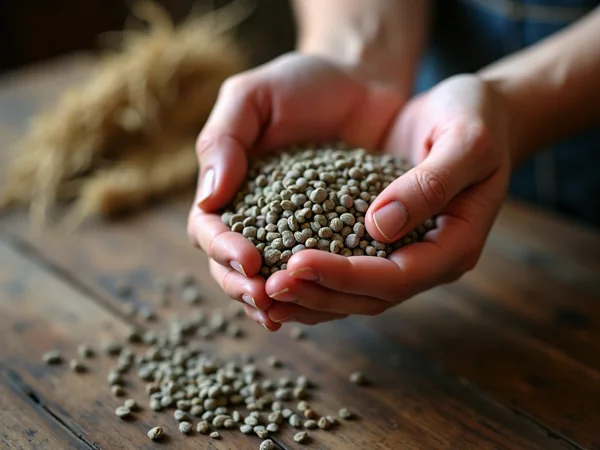
| Hemp seed oil | LA (omega-6), ALA (omega-3), oleic acid (omega-9), small amounts of GLA | Supplies LA, which cats need. Its ALA is not a reliable route to EPA or DHA in cats. |
| Flaxseed oil | ALA (omega-3) | Rich in ALA, but cats convert almost none of it to EPA. |
| Animal fat in the food | AA and other fats | The usual source of AA, which cats must get from their diet. |
Fat profiles from Today’s Veterinary Practice and, for hemp seed oil, Banskota et al., 2022.
Can a cat have too much omega-3?
Yes, extra fat is not free. Veterinary nutrition sources list possible side effects of omega-3 supplements, including vomiting or diarrhea, reduced platelet clumping, changes in immune function, slower wound healing and interactions with some medicines (Today’s Veterinary Practice). They also advise caution with high-fat feeding in pets that are overweight or have problems handling fat.
Calories count as well. Every gram of fat carries 9 calories (U.S. FDA). A normal, neutered 10-pound adult cat needs only about 262 calories a day (Animal Medical Center of Chicago), so a little oil goes a long way. Keep all extras, oils, toppers and snacks, under about 10% of daily calories; VCA Animal Hospitals suggests aiming for 5% to be safe (VCA).
How to add omega fats the sensible way
- Start with the food. Check the AAFCO statement and the life stage. If the food is complete and balanced, your cat already gets the essential fats it needs.
- Talk to your vet if you have a goal. If you want more EPA and DHA for a reason, ask about the product and the amount.
- Measure, don’t pour. Use the dropper or scoop that comes with the product and follow the label for your cat’s weight.
- Go slowly. Start with less than the full amount for the first few days and watch the litter box.
- Store oils well. Fats can turn rancid with time and warmth; keep the cap closed and follow the storage note on the label. Cornell gives the same advice for dry food: long storage makes fats more likely to go rancid (Cornell).
Want the practical side? Our step-by-step guide on how to add oil to cat food covers amounts, mixing and storage.
When to call the vet instead
A dull coat, flaky skin, weight loss, vomiting or a change in appetite can all have medical causes. Long-term studies of cats fed diets missing essential fats showed skin changes and liver problems (MacDonald et al., 1984), but those were lab diets with no essential fats at all. A cat on a normal complete food who looks unwell needs an exam, not a guess at the pantry. If your cat has a health problem, talk to your veterinarian.
Frequently asked questions
Do cats need omega-3?
Yes. Cats need essential fats in their diet, and the National Research Council lists EPA and DHA requirements for cats. A complete and balanced cat food is designed to provide them. Ask your vet before adding a supplement.
Can cats use plant omega-3 like flax or hemp seed oil?
Cats can eat the ALA in plant oils, but they convert almost none of it into EPA or DHA because they have low activity of the enzyme delta-6 desaturase. Plant oils are not a reliable EPA or DHA source for cats.
What is the best source of EPA and DHA for cats?
Marine sources such as fish oil contain EPA and DHA directly. Many cat foods already include them. Your vet can tell you whether your cat needs more and how much.
Can I give my cat human fish oil capsules?
Do not guess. Doses for people and cats are very different, and some human products contain added ingredients. Ask your vet which product and dose fit your cat.
How much omega-3 should a cat get?
There is no single number for every cat. It depends on the food, the cat’s size and age, and any health goal. Follow the product label and your vet’s advice.
Are there side effects of omega-3 for cats?
Possible side effects include vomiting or diarrhea, and high doses can affect blood clotting and wound healing. Start slowly and talk to your vet, especially if your cat takes medicine.
Sources
- Today’s Veterinary Practice: The Role of Dietary Fatty Acids in Dogs & Cats
https://todaysveterinarypractice.com/nutrition/role-of-dietary-fatty-acids-in-dogs-cats/ - Cornell Feline Health Center: Feeding Your Cat
https://www.vet.cornell.edu/departments-centers-and-institutes/cornell-feline-health-center/health-information/feline-health-topics/feeding-your-cat - PetMD: Fish Oil for Cats (Barri J. Morrison, DVM)
https://www.petmd.com/cat/general-health/fish-oil-cats - Banskota et al. (2022), Triacylglycerols and Other Lipids Profiling of Hemp By-Products, Molecules (open access, PMC9000728)
https://pmc.ncbi.nlm.nih.gov/articles/PMC9000728/ - U.S. FDA: Interactive Nutrition Facts Label, Total Fat (PDF)
https://www.accessdata.fda.gov/scripts/interactivenutritionfactslabel/assets/InteractiveNFL_TotalFat_October2021.pdf - Animal Medical Center of Chicago: Daily Calorie Requirements for Cats
https://www.animalmedicalcenterofchicago.com/cat-diet-calorie-requirements-for-cats/ - VCA Animal Hospitals: Treats should make up to 10% of your pet’s calories
https://vcahospitals.com/resources/preventive-cat/nutrition/true-or-false-pet-treats-should-make-up-10-percent-of-your-pet-s-daily-calories - MacDonald et al. (1984), Essential fatty acid requirements of cats, Am J Vet Res (PubMed 24049889)
https://pubmed.ncbi.nlm.nih.gov/24049889/
Sources were opened and read on November 1, 2026.