Hemp Seed Oil for Cats: What It Is, What It Isn’t, and How It Compares to Fish Oil
What hemp seed oil is
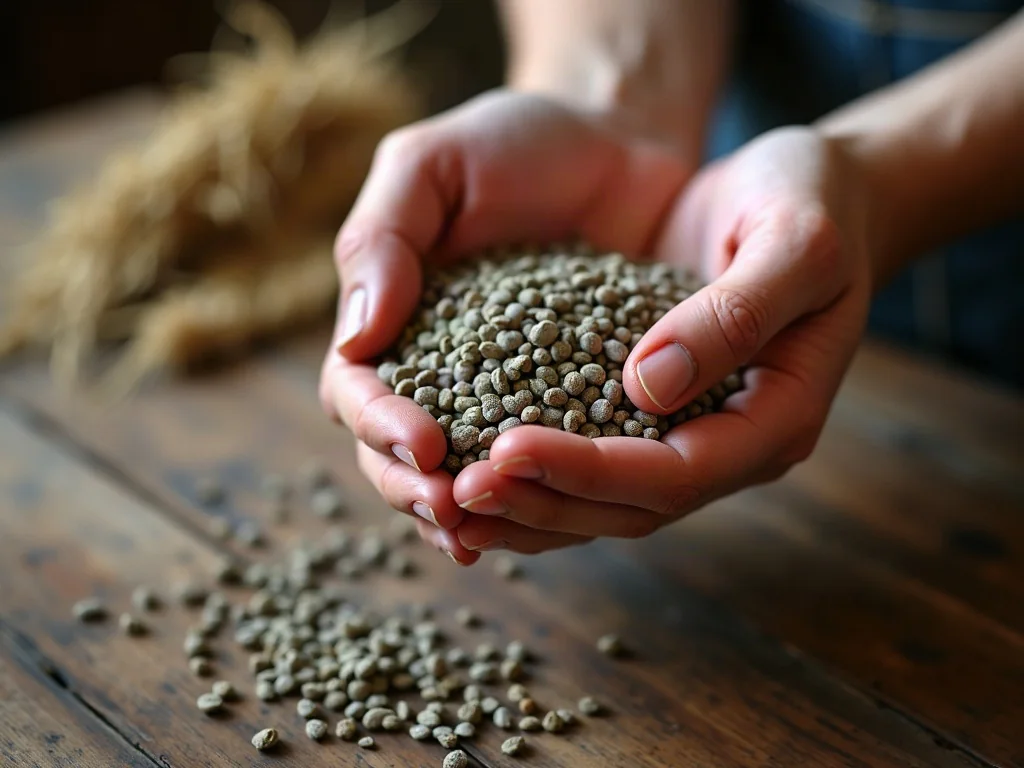
Hemp seed oil comes from the seeds of the hemp plant. Commercial hemp oil is commonly made by cold pressing the seeds, which squeezes out the oil and leaves behind a seed cake (Banskota et al., 2022). The result is a green-gold oil with a nutty smell.
In the United States, hemp seed oil is an ordinary food ingredient for people. In December 2018 the U.S. Food and Drug Administration said it had no questions about a company’s conclusion that hulled hemp seed, hemp seed protein powder and hemp seed oil are generally recognized as safe (GRAS) for their intended uses in human food (U.S. FDA).
Hemp seed oil is not CBD oil
This is the most common mix-up, and it matters. The FDA explains that although hemp is the same species as cannabis (marijuana), the seeds themselves do not naturally contain THC, the compound that makes people “high.” Hemp seed ingredients contain only trace amounts of THC and CBD, picked up when seeds touch other parts of the plant during harvest and processing (U.S. FDA).
CBD products are a different thing, made to deliver CBD. When you shop, read the label: a hemp seed oil should name hemp seed oil as the ingredient. If a product lists CBD or “cannabidiol,” it is a CBD product, and that is a separate conversation to have with your veterinarian.
The fats inside hemp seed oil
A 2022 lab study of hemp oils, including a cold-pressed hemp oil, found that:
- Linoleic acid (omega-6) was the main fat, more than 54.9% of the total fatty acids in every oil tested.
- Alpha-linolenic acid (ALA, omega-3) was second.
- Oleic acid (omega-9) and palmitic acid came next.
- Smaller amounts of stearic acid and gamma-linolenic acid (GLA) were also found.
Source: Banskota et al., 2022, Molecules.
That is why hemp seed oil is often described as an “omega 3-6-9” oil. Those three letters are accurate, but the details matter for cats.
What those fats mean for a cat
Linoleic acid is a real need. Linoleic acid is an essential fatty acid for cats. In a long study at UC Davis, cats fed diets with no essential fatty acids developed fatty livers and thickened, scaly skin, and those signs were prevented when a seed oil supplied linoleic acid (MacDonald et al., 1984). A complete and balanced cat food already provides it, but it is useful to know that this fat matters.
ALA is not EPA or DHA. Cats have very low activity of the enzyme delta-6 desaturase, so their bodies make almost no EPA from ALA, and almost no arachidonic acid from linoleic acid (Today’s Veterinary Practice). So while hemp seed oil does contain omega-3, it should not be counted as a source of the long-chain omega-3s found in fish.
Arachidonic acid comes from animal fat. Cats must eat arachidonic acid, and it is typically found in animal fat with little to none in plant oils (Today’s Veterinary Practice). Your cat’s meat-based food is where that comes from.
Hemp seed oil vs fish oil for cats
| Hemp seed oil | Fish oil | |
|---|---|---|
| Where it comes from | Pressed hemp seeds | Cold-water fish such as salmon, mackerel and trout |
| Main fats | Omega-6 LA, omega-3 ALA, omega-9 oleic acid, some GLA | Omega-3 EPA and DHA |
| EPA and DHA for cats | None directly; cats convert almost no ALA | Supplies them directly |
| Smell and taste | Mild and nutty | Fishy, which many cats like |
| Typical role | A small food oil in the daily routine | A supplement your vet may suggest for a specific reason |
Fish oil details from PetMD and Today’s Veterinary Practice; hemp seed oil fats from Banskota et al., 2022.
These two oils do different jobs, so “which is better” depends on the goal. If your vet wants your cat to have more EPA and DHA, fish oil is the direct route, and PetMD advises using it under your veterinarian’s guidance (PetMD). If you simply want a mild plant oil as part of mealtime, hemp seed oil is one option. Some households use neither, because the cat’s complete food already covers its needs.
Is hemp seed oil OK for cats?
Hemp seed oil is a food oil, and the main things to think about are the same as for any added fat:
- Calories. Fat has 9 calories per gram (U.S. FDA), and a normal neutered 10-pound adult cat needs about 262 calories a day (Animal Medical Center of Chicago). Stick to the label amount, which for most cat products is a few drops.
- Tummy upset. Extra fat can cause vomiting or diarrhea in some pets, and high-fat feeding needs care in cats that are overweight or have trouble with fat (Today’s Veterinary Practice). Start small.
- Medicines and health conditions. Cornell’s Feline Health Center advises that supplements should not be given without a veterinarian’s approval (Cornell). If your cat is on medicine, is pregnant or nursing, or has a health condition, ask first.
- THC and CBD. Choose a product that is clearly hemp seed oil and states no THC. Avoid guessing with products made for people.
How to choose a hemp seed oil for a cat
- Read the ingredient list. Look for hemp seed oil by name. Short, clear lists are easier to judge.
- Check for “no THC.” A pet product should say it plainly.
- Look for a cat amount on the label. A dropper with a clear cat serving makes measuring easy.
- Pick a flavor your cat may like. Many cats prefer a mild or meaty taste.
- Smell it. Fresh hemp seed oil smells nutty. A sharp, paint-like smell means the oil has gone rancid; throw it out.
- Skip big health promises. A food oil is a food. Anything that sounds like a cure is a red flag.
How to start
Begin with less than the label amount for the first few days, mix it into a small portion of wet food your cat already loves, and offer it at the same time each day. Cats can be suspicious of new foods; Cornell notes a cat may refuse a new food simply because it is new (Cornell). Patience works better than force. Our guide on how to add oil to cat food walks through each step, and omega-3 for cats explains EPA, DHA and ALA in more depth.
If your cat stops eating, vomits, or has diarrhea that does not settle, stop the oil and talk to your veterinarian.
Frequently asked questions
Is hemp seed oil the same as CBD oil?
No. Hemp seed oil is pressed from hemp seeds and is a food oil. The FDA notes hemp seeds do not naturally contain THC and hemp seed ingredients carry only trace amounts of THC and CBD. CBD oil is a different product made to deliver CBD.
Can cats have hemp seed oil?
Hemp seed oil is a food oil, and many pet products are made for cats. Use a product made for pets, give the small label amount, start slowly, and ask your vet first if your cat has a health condition or takes medicine.
Does hemp seed oil have omega-3 for cats?
It contains the plant omega-3 ALA. Cats convert almost no ALA into EPA or DHA, so hemp seed oil should not be counted as a source of those long-chain omega-3s.
Is hemp seed oil or fish oil better for cats?
They do different jobs. Fish oil supplies EPA and DHA directly. Hemp seed oil supplies omega-6 linoleic acid, plant omega-3 and omega-9. Your vet can tell you which, if either, fits your cat.
Will hemp seed oil make my cat high?
No. The FDA says hemp seeds do not naturally contain THC and hemp seed foods are not capable of making people high. Choose a pet product that states no THC.
How much hemp seed oil can I give my cat?
Follow the product label for cats, which is usually a few drops a day, and start with less for the first few days.
Sources
- Banskota et al. (2022), Triacylglycerols and Other Lipids Profiling of Hemp By-Products, Molecules (open access, PMC9000728)
https://pmc.ncbi.nlm.nih.gov/articles/PMC9000728/ - U.S. FDA: FDA Responds to Three GRAS Notices for Hemp Seed-Derived Ingredients (Dec 20, 2018)
https://www.fda.gov/food/cfsan-constituent-updates/fda-responds-three-gras-notices-hemp-seed-derived-ingredients-use-human-food - Today’s Veterinary Practice: The Role of Dietary Fatty Acids in Dogs & Cats
https://todaysveterinarypractice.com/nutrition/role-of-dietary-fatty-acids-in-dogs-cats/ - MacDonald et al. (1984), Essential fatty acid requirements of cats, Am J Vet Res (PubMed 24049889)
https://pubmed.ncbi.nlm.nih.gov/24049889/ - PetMD: Fish Oil for Cats (Barri J. Morrison, DVM)
https://www.petmd.com/cat/general-health/fish-oil-cats - U.S. FDA: Interactive Nutrition Facts Label, Total Fat (PDF)
https://www.accessdata.fda.gov/scripts/interactivenutritionfactslabel/assets/InteractiveNFL_TotalFat_October2021.pdf - Animal Medical Center of Chicago: Daily Calorie Requirements for Cats
https://www.animalmedicalcenterofchicago.com/cat-diet-calorie-requirements-for-cats/ - Cornell Feline Health Center: Feeding Your Cat
https://www.vet.cornell.edu/departments-centers-and-institutes/cornell-feline-health-center/health-information/feline-health-topics/feeding-your-cat - Cornell Feline Health Center: Anorexia
https://www.vet.cornell.edu/departments-centers-and-institutes/cornell-feline-health-center/health-information/feline-health-topics/anorexia
Sources were opened and read on November 1, 2026.